
King Olaf’s Roast Beef was a short-lived “convenience restaurant” chain based in Houston that was founded by the National Convenience Store Company. The NCS Co dates back to 1959, when F. J. Dyke, Jr., an executive at the U-Tote-M convenience store chain, left his job to begin franchising locations. He purchased five existing Stop n Go stores in San Antonio and converted them to U-Tote-M. Dkye would continue to grow the company, eventually buying all of U-Tote-M’s operations in California. This would start an acquisition spree, which would net over 600 locations across 12 states by 1964. To hold all of these stores, Dyke created the company National Convenience Stores Inc., reflecting his desire to expand to a national presence. As NCS expanded, the U-Tote-M name was discontinued, and locations were renamed to the former Stop N Go name. This push also reined in many chains acquired through a merger agreement that had initially retained their prior names. With the sudden formation of a large C-Store chain across the Southern United States, investors were eager to line up and buy their way into National Convenience Stores. With this new investment round came new leadership, specifically C. Olaf Talla, a former Vice President of Kroger.
At the time, National Convenience Stores Inc. looked to diversify its operations. Some of the plans for diversification likely originated with Mr. Talla, as Kroger was well familiar with the diversification process. The first acquisition by NCS was Sanitary Farm Dairies. This Houston-based dairy was also the master franchisee for Baskin-Robbins in Texas. NCS would also purchase hundreds of Kwik Change Oil franchises. Finally, in 1969, NCS entered the fast-food industry with its own concept, King Olaf’s Roast Beef. When the project was revealed to the public, the company already had three locations under construction in Houston in early 1969. The company outlined big plans for King Olaf’s. At the time, NCS stated that it had seven other properties, bringing the total to a projected 10 stores. The restaurants were to serve Roast Beef, Turkey, and Danish Ham sandwiches, along with an unspecified assortment of sides. The name was referential to the VP of NCS, indicating his involvement, and to the historical figure King Olaf. Playing on the Euro connection, King Olaf locations were to feature thematic Decor, painted in blue and green, with roofs covered in vibrant green tiles. The buildings would be approximately 3,000 square feet, with a strong emphasis on the dining area and no drive-thru capabilities. The locations would also receive a distinct “notch” along their back end for a power supply.
The King Olaf concept was considered a test from the outset, and after constructing three locations in Houston, the test was effectively suspended. Pinemont and NASA Blvd. would open around the same time in mid-1969. Shortly after, C. Olaf Talla resigned from NCS and King Olaf’s. By the start of 1970, the final location on S. Shepherd had also opened. While most of the investments NCS had made were sound and would likely pay off in the long run, a recession starting in 1969 and lasting through 1970 put the still-new company on shaky ground. In reverse of their previous directive, NCS was advised to focus on their core Stop n Go Market and ditch their subsidiaries. The first to go would be Sanitary Dairies and the Baskin-Robbins franchises, which, while profitable, were distracted from the main business. The first King Olaf location to close was the S Shepherd location, which closed just over a year after opening. It would be leased to Prince’s, which would operate a Coffee Shop in the space rather than a Drive-In. The next to close was the Pinemont store, which would be leased to Village Inn Pizza Parlor. It seems that the W. NASA Blvd location operated for at least a year, under a franchisee, before finally becoming a Chinese restaurant in 1974, making it the longest-lasting of the chain.
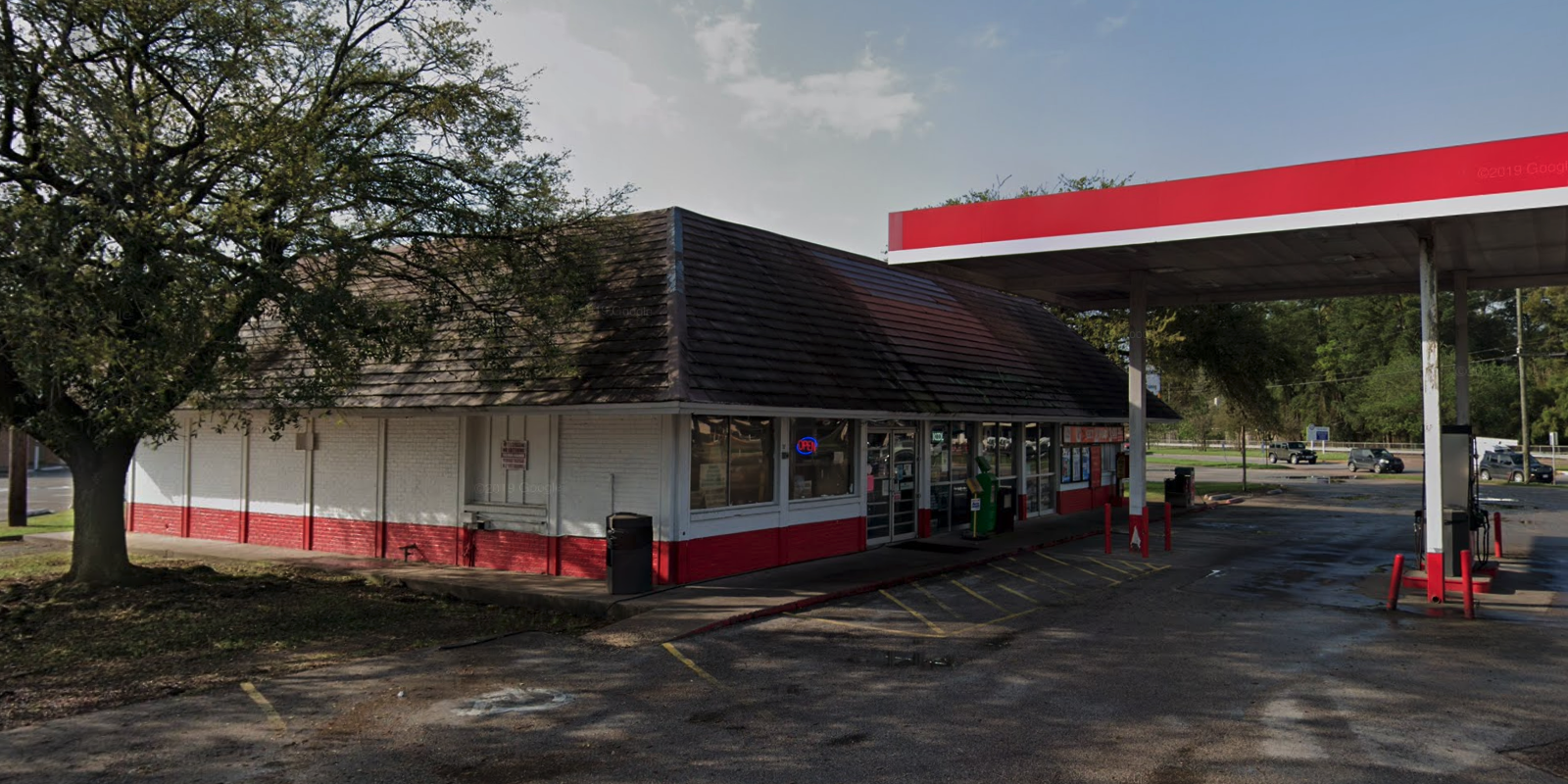
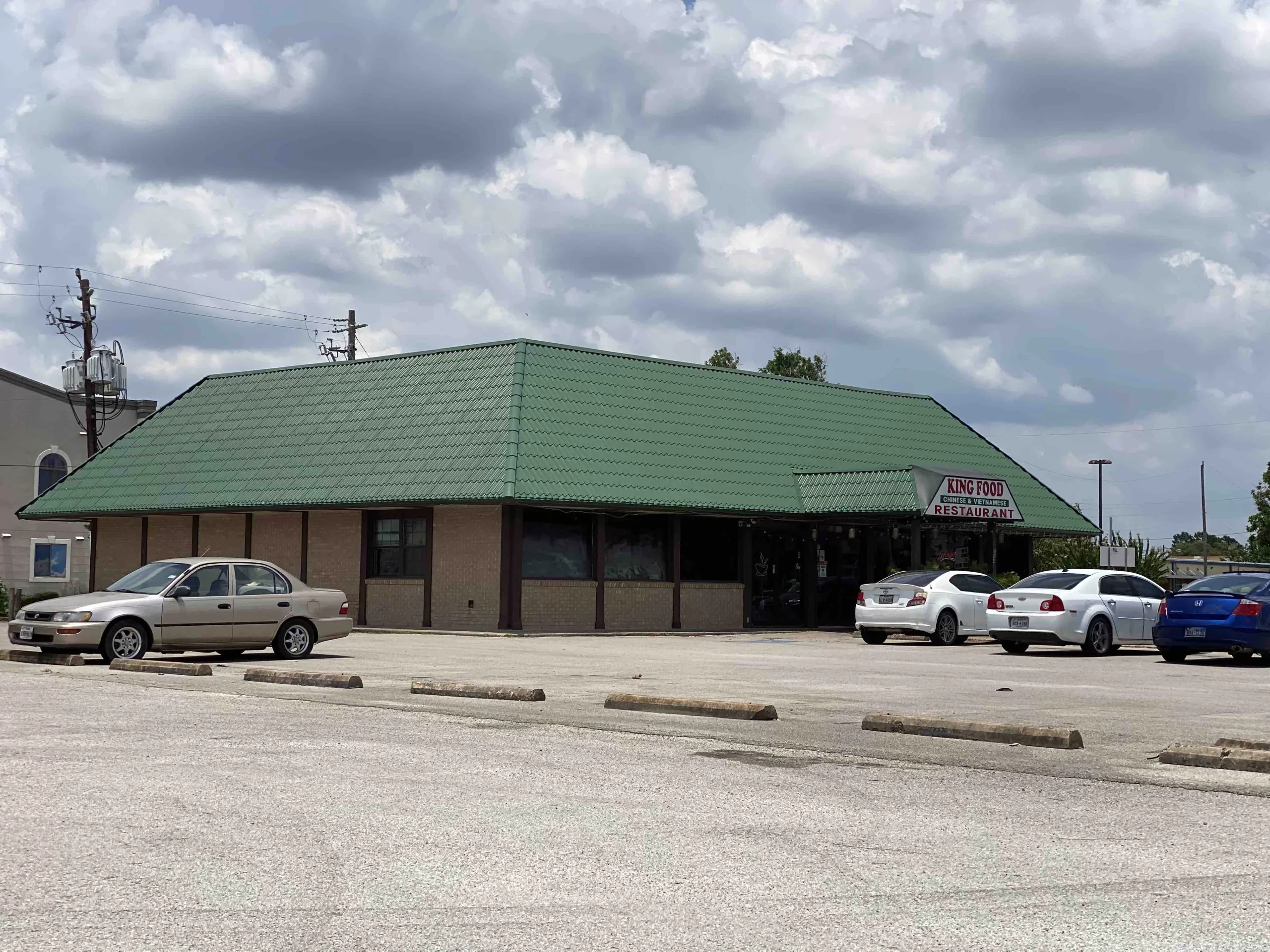
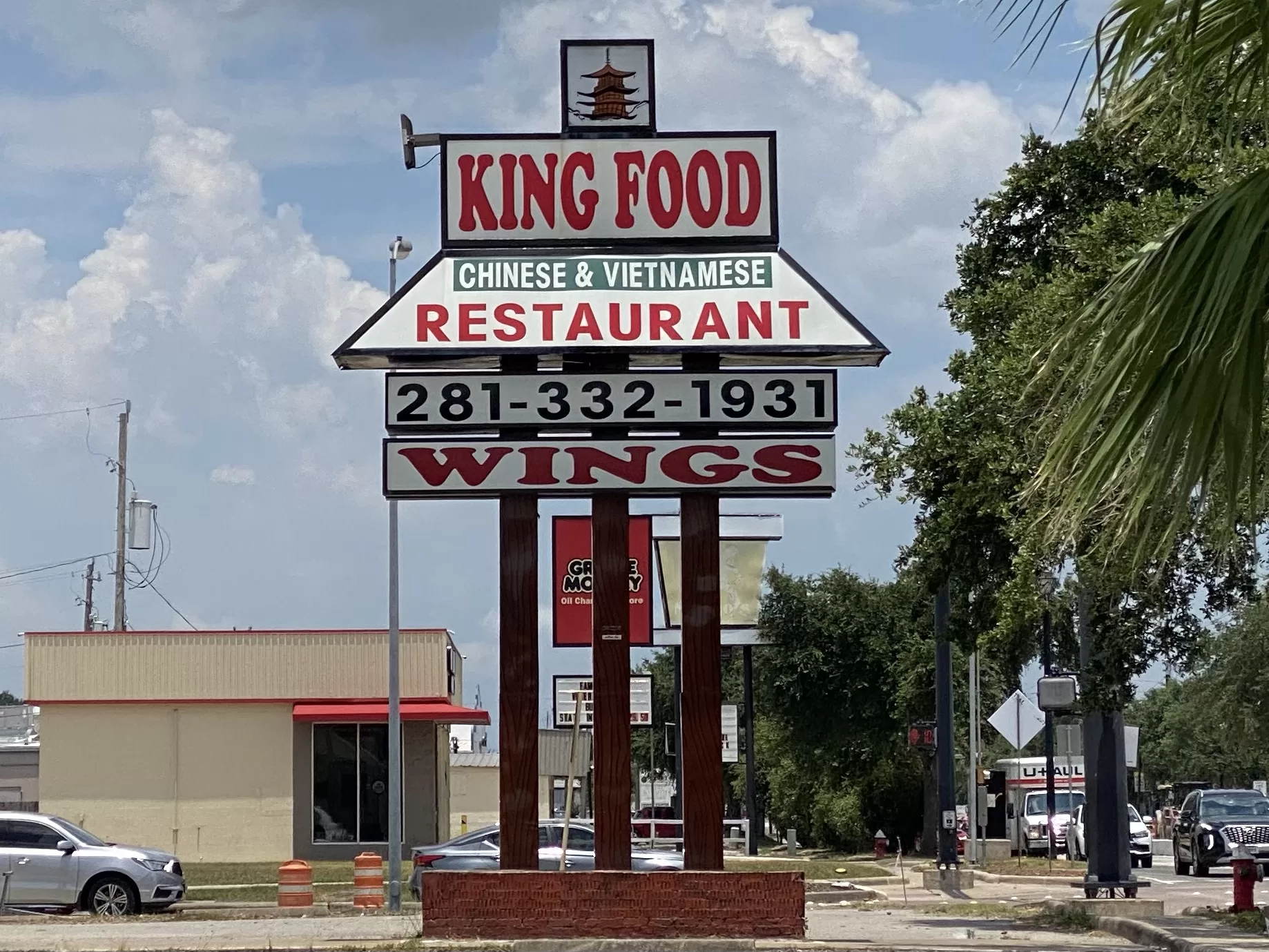
With all three locations closed, the buildings would see a range of uses over the years. Although the fast-food industry had not yet been established at Stop n Go, the locations they selected were successful. Over the years, S. Shepherd has continuously hosted a handful of staple restaurants in the River Oaks area. The W. NASA Blvd location has maintained a Chinese menu and largely retained the building’s original design. Eventually, they switched their name to King Foods, using King Olaf’s original sign. The final location, Pinemont, was sufficiently suitable that Stop n Go acquired it and operated it as a convenience store for many years. By the 1990s, through a series of sell-offs and buyouts that transformed NCS, the store was acquired by Handi-Stop, which, as of 2022, had closed. In 2023, the original structure was demolished to make way for a new gas station on the same site. Stop n Go, in its later forms, began experimenting with fast food again in the 1990s. However, this time it would be through dedicated in-store counters, again not making it out of the test phase. While King Olaf’s is a distant memory, the experimentation provides the foundation for the familiar modern-day crossover of a fast-food restaurant and gas station—an idea that a couple of Houston-based chains would help bring into the mainstream years later.
Location List
Address | Notes |
|---|---|
| 1295 Pinemont Dr, Houston, TX 77018 | 1969-1972 Closed for Village Inn Pizza, Later Stop n Go, sold to Handi Plus and later Handi Stop, Demolished 2023 for Swift |
| 704 W NASA Pkwy, Webster, TX 77598 | 1969-1974 Later House of Chan, King Foods Chinese & Vietnamese as of 2023 |
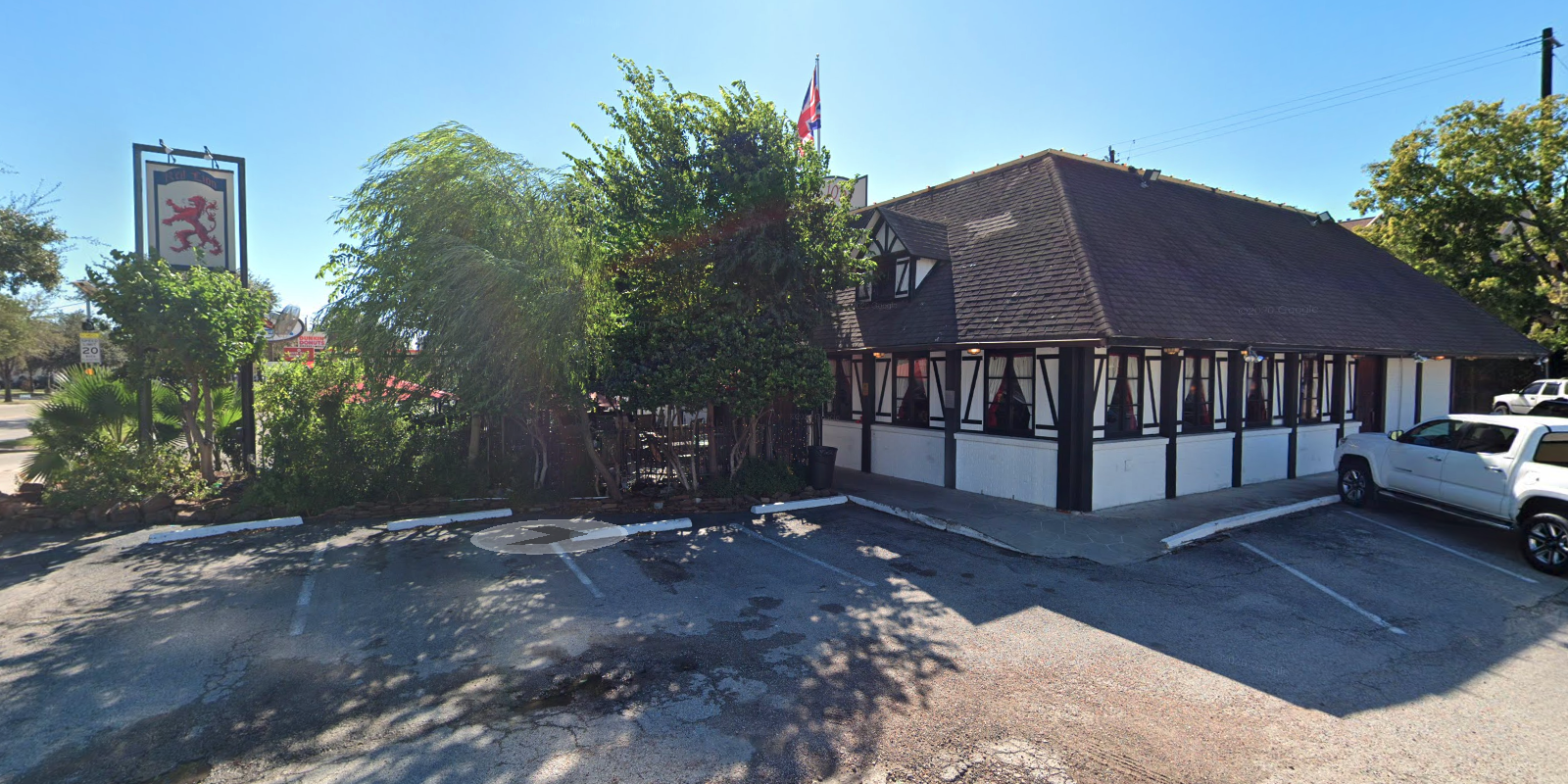
| 2316 S Shepherd Dr, Houston, TX 77019 | 1970-1971 Closed for Prince's Coffee Shop, Later Hickory Farms BBQ, Captain's Anchor, Luke's Hamburgers, Schlotzky's, Cioa Luna, Andrettis, Currently Red Lion as of 2023 |
I remember it when I was a kid and my dad worked for NASA down there. They were really good , superior to Arby’s stuff today .