The Pre-Fiesta days
Fiesta Mart is a regional grocer with deep roots in Houston, Texas. The store’s origins can be traced back to a few key figures, most notably Donald Bonham. Bonham was born in 1928 in South Texas to Otha Bonham, a former farmer who had become a grocer. The Bonham family farm was destroyed in the 1919 Hurricane, forcing Otha and his wife Gladys to relocate to Corpus Christi. They initially planned to become teachers together. However, Otha found an empty grocery store, and with the help of his two brothers, one of whom owned a gas station, they bought the store. While his brothers would initially own shares in the aptly named Bonham Foods, Otha would take the lead in operations. He would recruit his young son’s help during High School to run the store while most of the young men of Corpus were abroad fighting in World War II. Donald would later recall that he struggled in school and that his time at his father’s store was some of his best. While these struggles would later help him make decisions for his company, the success he experienced working for Bonham Foods inspired a lifelong passion in young Donald. In 1945, Bonham graduated from High School and purchased his first store at 3006 S Alameda in Corpus Christi. Using the family name of Bonham Foods, young Donald quickly established a loyal customer base. By 1950, he expanded this first small store, creating a full-size, modern supermarket for the time. By 1952, Donald would open a second location. Over the next few years, Donald Bonham would become the driving force behind Bonham Foods. During this period, he would also become the majority owner of the chain, having far more stores than his father. The growing chain was quickly becoming one of the most popular stores in Corpus Christi, even if it wasn’t the largest.
To keep up with competition like HEB and Jitney Jungle, Bonham relied on innovative advertisements and invested in his community. A notable early promotion took place on July 4, 1954. Bonham sponsored a treasure hunt that involved stuffing redeemable prize certificates into 7-Up bottles, attaching parachutes, and dropping the bottles from a plane along the shores of Corpus Christi for beach-goers to find and redeem. By 1956, Bonham Foods had expanded out of Corpus with a store in nearby Beeville. Part of Bonham’s success was in appealing to Hispanic customers, inviting them into his stores as equals at a time when other chains denied them entry. At the time, segregation was still common in Texas. While in school, Bonham had been placed in a remedial class. As one of the only non-Hispanic children in the class, Bonham quickly realized that his new classmates were equal to him, and took note of this when building his stores. In a heavily Hispanic town like Corpus Christi, good money could be easily made by serving Hispanic-American shoppers. While Bonham Foods was never a Hispanic-specific chain, Bonham’s businesses would all embrace equality. During these formative years, Bonham accomplished a great deal. He had not only built a successful grocery chain but also had taken night courses at Del Mar College, gotten married, and fathered a few children. Although he did not obtain a college degree, he also took some special retailing courses offered by the University of Chicago. However, this quick approach to life, emphasized work, and took a toll on Bonham and his relationships. In 1958, he and his first wife divorced. The need to provide alimony to his ex-wife would lead Bonham to sell half the interest in his chain to an unnamed partner.
While the chain was doing well, it was evident that Bonham’s interest in running the grocery stores was waning. Beyond the chain, he had also become influential in Corpus Christi’s banking community. Possibly feeling it was time to move on, Bonham would leave the partner in control of Bonham Foods and move to Belize to check on a failed Maghoany Farm that his bank had repossessed. Bonham planned to get the farm operational, but moving to South America revealed that the community the farm was in could barely support itself, much less a business. While the village was happy to receive investment, it lacked the bare essentials, like a reliable food supply to keep employees. Bonham would experiment with growing all sorts of different crops, including kidney beans to help alleviate food problems, but could never get the mahogany trees to grow. While unable to make the farm profitable, this experience left a lifelong impression on Bonham. He eventually sold the plantation and returned to Texas around 1960. In his absence, Bonham Foods had continued to grow, but its struggles against the competition had also intensified. Bonham would slowly sell off his remaining interest in the chain, with some stores continuing to use the name throughout the early 60s. Instead, He would focus on banking, specifically looking to finance projects in South America. These connections would help Bonahm to begin building a relationship with the members of the Chilean Government, which was looking to reform agriculture in their country. Before this reform, agriculture was easily the weakest sector of Chile’s economy, and the vast majority of food was imported rather than grown locally. The program was meant to bring their agriculture into the modern age, and required a significant amount of work on the backend. For example, Chile lacked a functional distribution system for local products, and many stores weren’t set up to sell fresh produce. Due to a lack of internal experience, the Chilean government hired Bonham as a consultant to help establish a chain of supermarkets within the country. Bonham would have to start from scratch, building up what we would consider a cooperative chain. This five-year contract with the Chilean government required him to remain in South America until the job was complete. He would become quite homesick during this period, with a strong craving for peanut butter, which was a distinctly American product at the time. He would eventually find a single jar in the capital city of Santiago, for which he paid $8, around $80 in 2024, which he gladly paid. With this experience, the seeds for Fiesta had been planted in Bonham’s mind, even though he did not yet see it on his horizon.
Returning to Corpus Christi after his five-year commitment was over, Bonham looked to enter the grocery game again with a fresh perspective. While Bonham had initially been wanted in Chile for consultation, he became intemately involved in the project, opening about 30 stores before returning the U.S. While he would maintain his roles at the bank, Bonham was drawn to find a new “day job” with Opportunity Stores, a new and growing chain based out of Baton Rouge, LA. Founded by Thomas Gillen, an entrepreneur with ambitions similar to Bonham’s, Opportunity Stores sought to address the issue of food deserts, which were rapidly growing in the South as chains withdrew from low-income areas. Gillen would purchase these stores at a low cost from large chains and then franchise the locations to local operators, creating a co-op of stores focused on serving lower-income areas. The plan was quite inventive, and the concept resonated with Bonham. Opportunity Stores would provide branding, advertising, and product purchasing, while allowing franchisees to tailor their stores to meet the needs of their local communities. Gillen was determined to have local community members run the stores, as he believed they knew what their community wanted best. By the late 60s, Corpus Christi’s oldest grocer, Biel’s, was struggling to keep up with the competition. Namely, HEB was repeating a practice seen in other Texas towns, where, in an attempt to drive out national competition, namely Kroger, they were undercutting locals to a severe degree. This predicament caused Biel’s to sell out to Opportunity Stores, who hired Bonham to head their entire Texas operations. Gillen had big plans for Texas, intending to open 100 Opportunity Stores by 1970. With Bonham in charge of Texas, it was up to him to scout new locations for Opportunity Stores to take over. Outside of Corpus Christi, however, the grocery market in Southern Texas was somewhat stagnant at the time, and Bonham began to look further North, specifically at Houston. The early 1970s were a time of significant change in the grocery industry in the Bayou City. We were experiencing an influx of national grocers for the first time. Safeway, Eagle, and others were forcing more local chains such as Weingarten’s and even the Kroger-owned Henke’s to step up their game and build bigger, better stores. One of these former Henke & Pillot locations, which had most recently been a Bi-Lo discount banner, hit the market at the start of 1972, and Bonham planned to acquire it for Opportunity Stores.
Bonham comes to Houston
The store was located at 3410 Fulton, directly across from Moody Park, in a neighborhood that had long been a working-class area. With an ever-increasing Hispanic population, Henke’s/Kroger abandoned the area in the mid-60s, building a new store closer to downtown. While Bi-Lo had performed well enough in that location, Kroger was not interested in continuing the concept and wanted to sell the property. Opportunity Stores appeared to be an excellent fit for the area, and Bonham began negotiating. It would also be up to Bonham to find someone willing to operate this store, and he was already pitching it as a Hispanic-oriented location. However, significant problems with Opportunity Stores would leave the company out of cash by around June of that year, and it would be filing for bankruptcy just a few weeks later. Still, Bonham had a concept, an idea, and some of the cash to back it, so when Opportunity Stores failed, he instead stepped up and purchased the store. Starting over for what was essentially the third time, Bonham would not go on this venture alone. While in Houston, he met O.C. Mendenhall, a Houstonian operating grocery chains in rural towns throughout Texas, Oklahoma, Kansas, and Arkansas. In the early 70s, Mendenhall sold his interest in stores outside of Texas. It appears that he may have been involved in Opportunity Stores’ plans for Texas, although not in any announced capacity before the chain’s collapse. Likely in the know about the existing plan, Mendenhall would proceed with Bonham to purchase the former Bi-Lo/Henke’s and agreed to become a partner. The final thing the duo needed was a name. They decided on “El Mercado,” which means “The Market.” This name would stick for quite a while during the store’s development until one day, Bonham, driving through downtown Houston, spotted a bright and festive sign with the word “Fiesta” on it, promoting apartments for rent. Bonham immediately inquired about purchasing the sign from the apartment complex, which would instead offer to rent it to him for $50 a month. With that, in July 1972, Fiesta Discount Super Market was born! The first store was relatively small by modern standards and combined elements of a traditional grocery store and a specialty retailer. Recalling his desire for peanut butter in Chile, Bonham was tasked with finding and stocking items that Hispanic customers would want to buy. At the same time, he would leverage his experience from Bonham Foods to develop the foundation of a grocery store that would complement these specialty products.
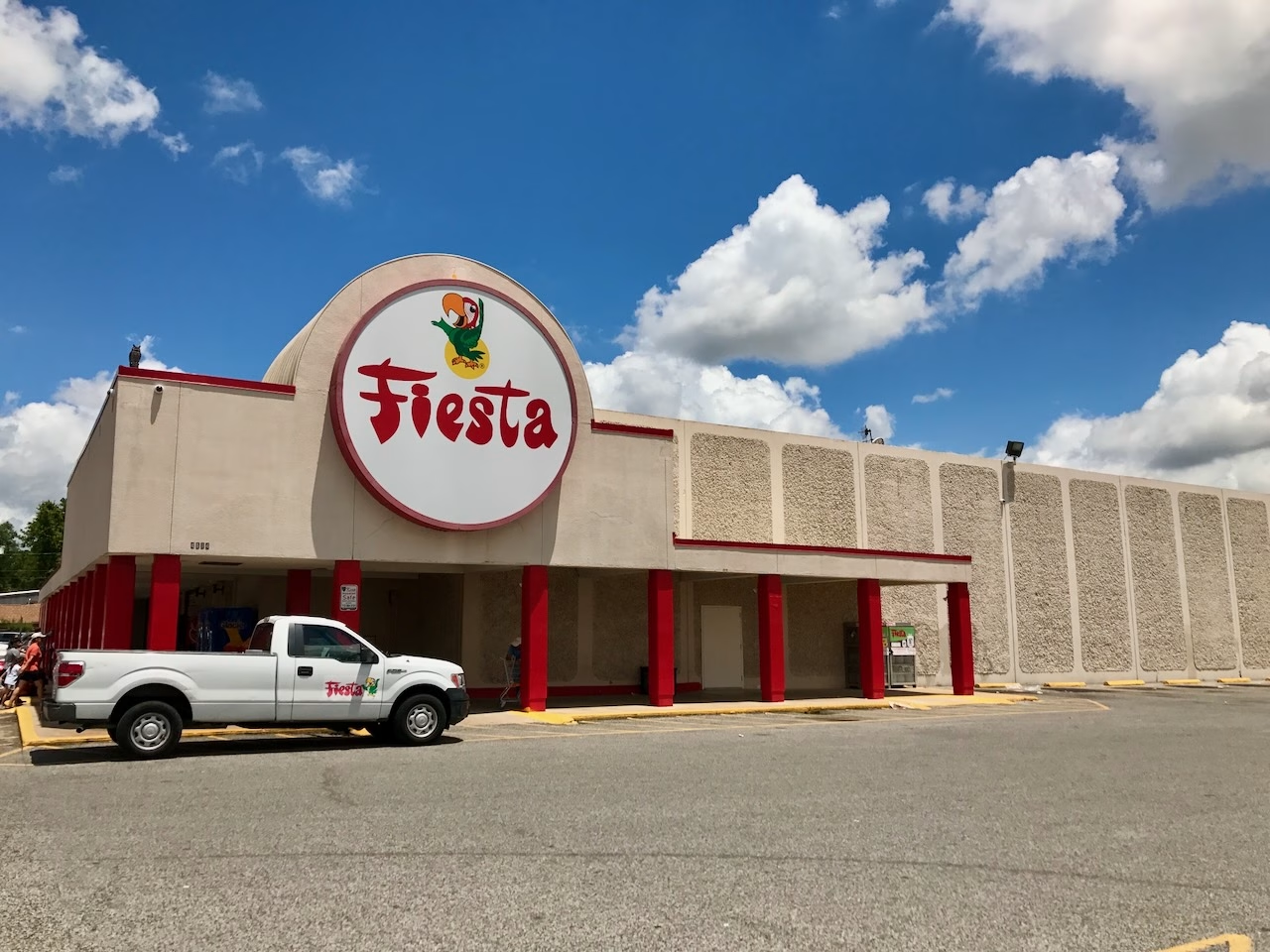
While the store was an equal partnership, Bonham took the lead regarding publicity from the start. It was also apparent that Bonham brought the same ambition he had with his previous ventures. In 1975, the pair had a chance to purchase a Food Giant location. Food Giant was a local chain run by the Belden family, who developed a concept comparable to modern “Superstores.” The store had a supermarket, clothing, jewelry, electronics, and hardware for sale under the same roof. When Fiesta purchased the store, they dubbed it “Fiesta Giant Mart” and kept it much the same as it was during the Belden days. This combination of grocery and general merchandise would start a trend for Fiesta, which has continued for over 40 years. The duo also realized there was a significant overlap between the products they carried and the cultures that wanted them (e.g., South American products were also recognized by and popular with African customers, or Indian products were also favored by Southeast Asians), gaining a reputation as more of an international grocer than specifically Hispanic-focused by 1977. In 1978, Fiesta opened its third location, off Spencer Highway, in South Houston. This new store would follow suit with the former Food Giant, occupying over 60,000 square feet and featuring numerous non-food departments. Unlike the first giant store, this location was non-traditional, occupying a portion of a larger flea market complex. The store was a test of placing a grocery store in a more traditional setting, one that might be seen in Latin America, where the store is surrounded by vendors to supply additional lines of merchandise. Again, Bonham and Mendenhall would use these new concepts to help build a prosperous future for their stores. However, not everything was easy for Fiesta.
A few months after the opening of the third store, the original location on Fulton was looted and damaged during the Moody Park Riots. Bonham said the store received anonymous threats that it would be burned down, a fate which would befall the neighboring Weiner’s Clothing Store. Bonham was alerted to the situation by his partner and stayed for much of the night to watch over the store as the situation eventually calmed. While Fiesta would need to close temporarily to repair the damage, this incident would not deter them; Bonham would redouble his efforts. In 1979, Fiesta would build its first brand-new store at 800 S. Wayside. The 60,000-square-foot structure would take influences from the other Fiesta “Giant Marts,” as the larger stores had been dubbed, and incorporate them into the new building. Most of the space was utilized for Fiesta. However, Vendors were also given room to set up a shop at the front of the store, creating a market space closer to what Hispanic consumers may have expected.
Big Stores in a Big City
While the S. Wayside store was a significant step, an even more substantial opportunity arose the same year when Fiesta was given the chance to purchase a former FedMart location on Mykawa Road. FedMart was an early innovator in discounting and arguably one of the first operations to successfully pioneer a Hypermarket format. They had established a presence in Texas early in their history, and the Mykawa location was their first in Houston. FedMart had left after buying out most of the Globe chain from Walgreens, making the old store redundant. FedMart had many facets that we’ve come to see in modern discounters and supermarkets, including a gas station and an attached strip center available for lease. While Fiesta would have no trouble filling out the market side, they would need a plan for the former gas station. While they would initially continue selling fuel, years later, an idea emerged to establish “Beverage Marts” out of the former FedMart gas stations. Liquor stores often found good business by locating near supermarkets, and Fiesta would ultimately adopt this innovation chain-wide. When the new location finally opened in late 1979, at approximately 100,000 sq ft, Fiesta would proudly boast that this new store was Houston’s largest supermarket. The move was seen as risky by competitors who felt the size of the building would be little more than a novelty. The FedMart stores were so large that they had initially been supplied by trains, and rail spurs had been built onto the back end for this purpose. Fiesta had the connections to fill the grocery space, but would have to increase the amount of general merchandise compared to the other stores. Unlike the former Food Giant, Fiesta would not run all departments directly. For example, rather than selling jewelry directly, they would lease that space to a third party and allow them to operate it. After a few years of experimenting with fine-tuning operations, Fiesta declared its takeover of FedMart a success and purchased two other defunct FM stores. One was in Gulfton, and the other was in the Spring Branch. Both of these stores would be quickly converted and reopened under the Fiesta banner. The Gulfton store would also bring in local figures from the Chinese and Asian communities to help better stock the store and serve a diverse customer base. That store would also deem its attached shopping center the “Fiesta International Bazaar,” where Bonham tried opening a company-owned pet shop, even selling parrots!
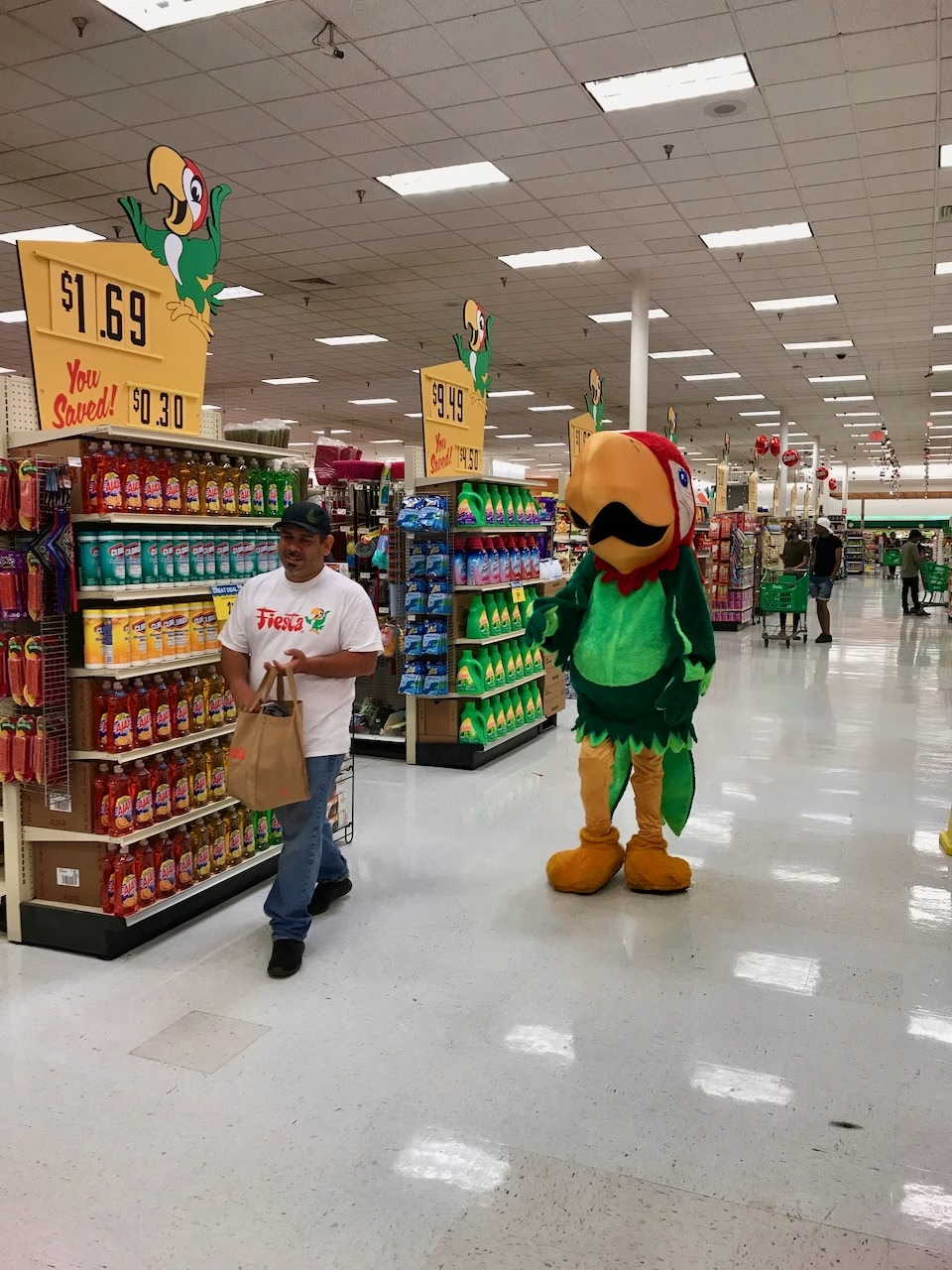
Eyeing its success with larger stores, Fiesta would also rebuild its Pasadena location directly behind the Flea Market. This new store would be slightly smaller than the FedMart prototype, as it would not require vendor space, but would still add approximately 25% more space than the old store. Throughout all the growth, Bonham continued to seek ways to engage with the community. With the opening of the new Spencer Highway location, he would place a 17th-century painting of the Last Supper by Bartolome Murillo above the entrance because he felt his customers would appreciate the chance to see a fine piece of art that he felt connected to their culture. Coming into the 80s, Fiesta was often mentioned as a “champion” of the grocery wars, which had knocked Weingarten’s off its pedestal and given Safeway a leg up on the competition. The only comparable grocer at the time was Randalls, which had been establishing itself since the original company’s 1960s sell-out to Piggly Wiggly. While the two companies were growing at a similar rate, Fiesta was easily outpacing Randalls in terms of size and revenue at this point, thanks to its focus on larger stores. When competitor Eagle’s Discount Center Supermarket owned Club stores, Gemco called it quits in Houston, and Fiesta announced it would purchase two of their former stores. Like with FedMart, they would continue pumping gas and selling general merchandise in these new ex-Gemco stores, albeit at reduced prices due to smaller stores. Some Fiesra stores would even begin experimenting with layaway departments for GM purchases. While some felt treading into department store territory was dangerous, Fiesta’s local focus paid off. Other discounters in town were usually multi-state operations falling under the weight of outside competitors like Walmart, Kmart, and Target. While the emphasis on big stores had helped cement a footing for the growing Fiesta, it wasn’t always feasible for the company to obtain prominent locations. In 1984, Fiesta announced it would purchase two small Weingarten’s locations in the inner city. The stores were in smaller neighborhoods and, while diverse, were not Hispanic-focused either. Bonham was quite in tune with the needs of these stores, focusing on rebuilding them into community-focused operators rather than the standardized Grand Union strategy.
While Bonham preferred larger stores, he was willing to experiment with a few smaller locations. Just over a year later, Fiesta nearly purchased two Eagle stores as the chain exited the Houston market. However, before the deal could be finalized, Fiesta backed out. Bonham claimed he had only agreed in the first place as a favor to his supplier, Grocers Supply Co., which was negotiating for the remainder of the stores, but indicated he thought they wouldn’t be successful. Lucky Stores Inc., owner of Eagle, was willing to let the deal proceed without those two stores, which likely prompted Bonham’s exit. While not wanting to take on the 30k Sqft outdated Eagle locations, Bonham had not abandoned the idea of smaller inner-city stores. In 1987, Fiesta experimented with a new “tiny” store concept at only 10k Sqft; it would more closely compete with Stop n Go than other supermarkets. The store would carry a curated selection of staple and specialty groceries and liquor under one roof. While this format proved an interesting concept, it could never return the number of sales Fiesta was looking to achieve, and it would close after about ten years. Another experiment that was run simultaneously was a Fiesta Dollar Store. Located in the Moody Park area, it would mark Bonham’s return to the area after the original store closed in 1984. The Dollar Store concept would last longer, seemingly entering the 2000s, but again, it was not successful enough to warrant expansion. While Fiesta was willing to experiment with certain things, they avoided others. For example, when questioned about adding dry cleaners, video rentals, and other gimmicks mainstream grocers had experimented with, Bonham explained that all he felt worth adding were banks. The following year, 1987, another giant store in the diverse Mission Bend would open. This store would bring its giant store concept to a unique area of newly built suburbs. It successfully brought in plenty of shoppers from the new neighborhoods and nearby Alief. Bonham would continue giving back to the community, building its reputation up as legendary. Of his family, only one daughter had entered into the grocery dynasty. His daughter Brenda, who married into the Gerland family, became Fiesta’s public relations manager. While there were no plans to merge the chains, this new connection helped solidify Bonhams and Fiesta as part of the core of Houston retailing.
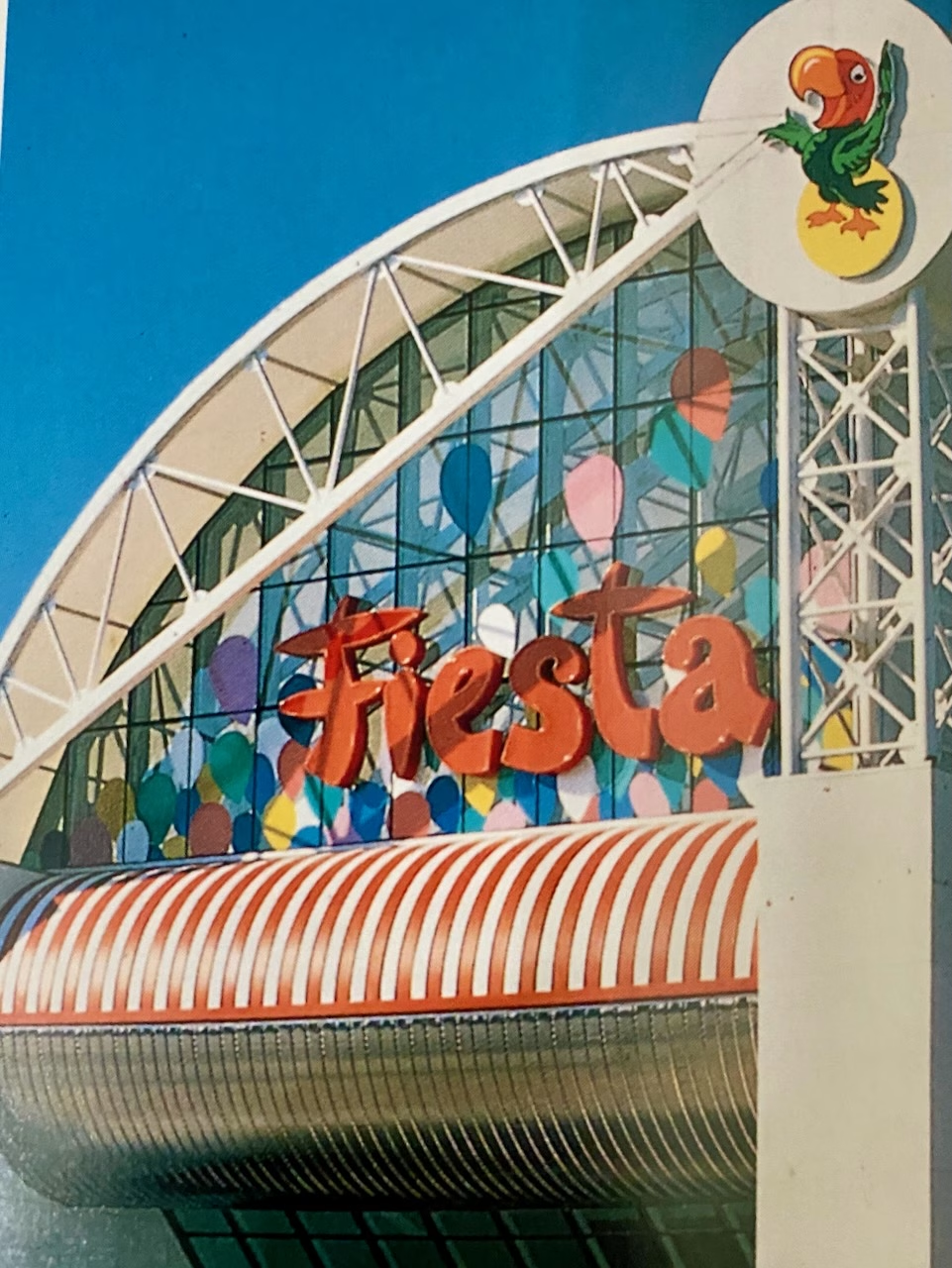
By 1989, Fiesta was approaching its 17th birthday, and Donald Bonham had grand plans to celebrate. Finding that larger suburban stores were their niche, Fiesta would continue to expand this way. They had considered building inside the loop but found tough competition; one specific incident involved Randalls, who outbid them for property at Shepherd and Westheimer. One advantage of these suburban stores was that they could dedicate much more space to innovative features. For example, Fiesta was the first grocer in Houston to “roll out” sushi bars. Bonham’s plan for the future included new stores in Willowbrook, Kukyendahl at 1960, Clear Lake, and a store in Little York near Bear Creek Park, which would never come to fruition. While most of these stores would be built similarly to other Fiestas, the planned Clear Lake store would celebrate grocery success. The store was scheduled to come in at 200,000 Sqft, featuring a massive hydroponic garden that would grow and sell fresh produce in-store. From the beginning, the hydroponic garden was seen as more of a marketing gimmick than anything else, but Fiesta felt that they were paving the way to the future. Fiesta also planned to have 25 stores operating by 1991, a goal they would not meet, but would still strive for. While Fiesta had been around for 17 years at this point, Bonham had been working in grocery for over 45 years, nearly non-stop, and was publicly considering retirement. He had interests outside of grocery, including being one of the founding owners of Gulf Greyhound Park. Bonham had also never lost his focus on the community, remaining actively involved in broad outreach efforts, such as sponsoring measles vaccines alongside the Houston City Council. Bonham also worked on building closer ties with the Houston grocery community. Later that same year, a new store was announced on a plot owned by Weingarten Realty, which, by this point, had long been out of the grocery game. Plans would also be announced for another large suburban location at 290 and Hollister. Keeping his outside interests and community focus in mind, Bonham would also lead a group of investors to purchase James Coney Island out of bankruptcy.
All that glitters isn’t Neon
With many irons in the fire, Donald Bonham had become quite a busy man again. With commitments to multiple different businesses and his ever-growing family, Bonham began thinking about the future of Fiesta. He didn’t want to operate the grocery store forever and had long planned to sell the store to his employees upon retirement. However, to accomplish this, Bonham needed to build a framework allowing Fiesta to operate without himself or co-owner Mendenhall. Part of this planning involved some self-reflection, and Bonham realized that in his haste to expand, the superstore model had been adopted without giving much thought to other options. While Fiesta had a dedicated management team, at its core, the company was still simply a local grocer. With so much of Fiesta’s identity tied to superstores, Bonham had to make the tough decision to change the company’s operational model. First, the experimental Hydroponic Fiesta store in Webster would be downsized. While the hydroponic garden had always been a bit of a gimmick, the store’s massive 236,000 sq ft footprint had been challenging to fill, even with the addition of the garden. Instead, the store would be subdivided, with 45,000 square feet leased to SportsTown. Next, the decision was made to cancel the 290 at Hollister location outright. Finally, the company would stop building larger stores, except Mesa at Tidwell and S. Main at Post Oak, which were already under construction. However, Bonham would emphasize that he had no plans to close any existing superstores. With these changes in operation, Bonham was building a stronger Fiesta, but more change was still needed. In 1992, Fiesta would close its location near Deerbrook Mall, instead leasing the space to long-time competitor Randalls. This decision was motivated by poor sales, which Bonham attributed to a lack of a core Hispanic customer base. While the company had been somewhat nearsighted in its predictions, by the end of the year, Fiesta was already beginning to see the benefits of trimming down its operations. In 1993, Fiesta finally closed the Webster former hydroponic store. Although the location had been downsized, it was still not financially viable to operate. While these changes had made Fiesta more resilient, a major change was on the horizon. Houston was about to reenter the grocery wars with the pending arrival of HEB and Food Lion. Bonham went on record calling this a foolish decision, as our market was already overbuilt. In a prophetic quote, Bonham stated that HEB coming into Houston was as silly as Fiesta trying to expand into DFW.
In the 1980s, Fiesta was listed among the champions of the grocery wars. Their stores were expanding, and their impressive square footage far exceeded that of most of the competition. However, the changes of the 1990s proved that the successes would not be enough to sustain the company. Fiesta would purchase four closing AppleTree locations in late 1993 and focus on reaching neighborhoods directly via smaller stores. Bonham would also continue his charitable efforts, helping to renovate a former Kmart adjacent to the new S. Main Fiesta into a community center. While acquiring these old stores would provide a valuable base for expansion, Fiesta was quickly reaching its expansion limit within Houston. Not only was Fiesta facing serious competition from newcomers like HEB and Food Lion, but local chains like La Michoacana were also increasing their presence. Even though Donald Bonham had indicated otherwise, Fiesta began to explore the prospect of opening stores outside of Houston. The first stores in Austin opened in 1992, shortly followed by those in Dallas. While Bonham had considered such a decision foolish only a few years prior, the gamble would work out for the grocery company. While Fiesta would focus on building new locations outside of Houston, they would not end development in Houston. Instead, they would pivot to buying out independents that had succumbed to larger chains. Fiesta would also end up purchasing several Rice locations throughout the 90s as they decided to bank everything on their Epicurean concept. This refresh of locations would allow Fiesta to prune some older locations. Overall, though, the 1990s proved to be a decade of growth following the early corrections. In 1997, Fiesta co-founder O.C. Mendenhall sadly passed away shortly after Fiesta’s 25th anniversary. Bonham and Mendenhall had mapped out the future of their chain but had failed to devise a comprehensive plan for transferring ownership to their employees. In 2003, Bonham passed away, leaving the chain in a state of turmoil. While members of the management team handled daily operations, no one in the Bonham or Mendenhall family was particularly interested in running the chain. Just over a year after his passing, Fiesta’s supplier, Grocers Supply Co., announced its plans to purchase the grocery chain. The plan wasn’t a bad one. GSC wasn’t a supermarket operator but planned to essentially leave Fiesta to its own devices. Fiesta was one of GSC’s largest customers, and the potential for a competitor to pick up could spell disaster.
New owners, new strategies
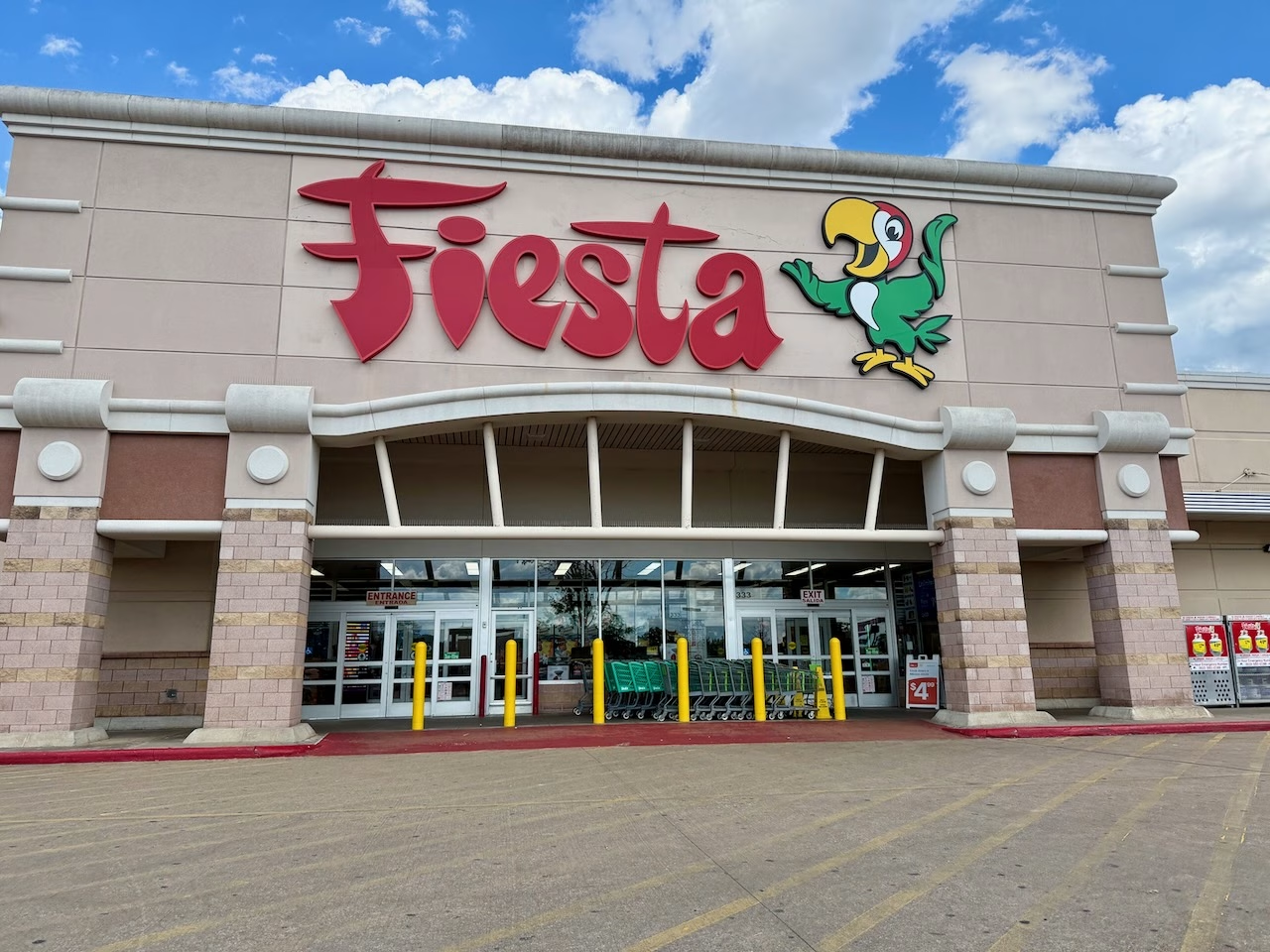
Grocers Supply Co. acted as a caretaker for its first few years of ownership. The chain was given plenty of funds to operate, but expansion seemed out of the question. However, in 2007, GSC gained control of an ex-Albertsons in Austin and helped Fiesta land the spot. The store would also see the return of a Fiesta Fuel Station, an on-and-off concept that Fiesta had used since its first ex-Fed-Mart store. While Austin would gain a new store, Grocers Supply decided to close the Katy Freeway Fiesta that same year. The closing was publicly attributed to the expansion of I-10; however, the store had been an underperformer for some time. Part of Fiesta’s woes during this time can be attributed to the fact that GSC was trying to compete with other clients it also served. In 2008, GSC acquired the majority of Minyards, a DFW-based grocery chain. They would earmark 11 locations to convert to Fiesta, and this would be the chain’s only progress for the next few years. With the economy stagnant, Fiesta was basically stuck in a holding pattern. During this time, many customers noted that Fiesta’s operations and sometimes quality began to drop below previous standards. While it wasn’t immediately apparent at the time, a plan was being developed behind the scenes that would help both Fiesta and its owner move forward. Similar to how the descendants of Fiesta’s owners had lost interest in running the chain, the family behind Grocers Supply Co had decided it was time to move on. In 2012, GSC would net Fiesta three more locations. The first was 12584 Westheimer, a former Kroger store, which was rather unremarkable compared to Fiesta’s of the past. GSC seemed to have the space available and knew the brand would fit. The following two stores were intended to add a bit of a flourish to Fiesta. With plans to sell Fiesta, GSC felt they needed to prove that the stores held broad appeal and were not just an ethnic chain. This would be Fiesta Market Place. The store would essentially be laid out as a conventional grocery store, with international products concentrated into a few central aisles. Gone were the long-standing Chinese food counters and Western wear. Instead, the store featured a sushi counter and a Caribou Coffee stand. The new Market Place concept would be tested at two locations. One in a former Gerland’s, another chain which GSC had acquired, located just outside the Sugar Creek neighborhood in Sugar Land. A similar, albeit smaller, location would also open in Conroe. While these stores demonstrated great promise for the future of Fiesta, the flagship Sugar Land store would close in March 2014, only nine months after opening.
While industry analysts at the time would criticise Fiesta for closing the store prematurely, there was something else going on. The reality was that Grocers Supply Co. was in the early stages of working out a deal to sell itself to C&S Wholesale Grocers. C&S, which as of 2025 still has no measurable grocery operations, had no desire to operate Fiesta. When the deal was announced, Fiesta was specifically carved out and would continue to be owned by the Levit Family, owners of GSC. While the Levits wanted to exit the grocery business altogether, they felt that Fiesta was worth more than the likely fire sale that would occur if it were sold to C&S. To help the chain along, the Levits decided to reintroduce their Market Place concept in a new location. A store in Cypress was initially planned as a Fiesta Market Place, but it never received the official branding. The store would be the final locally planned location, as in April of 2015, Fiesta was sold to ACON Investments. The firm would choose Michael Byars as the new President. He was somewhat familiar with the chain, as he had been president of Minyard’s during its final years. By this point, Fiesta was beginning to resemble Minyard’s in many ways. The locations were showing their age, with some acquired locations being downright ancient. Branding was often inconsistent, and marketing for the chain had fallen off. Fiesta’s reputation for quality had also taken many hits over the years. The grocery chain, which had once elbowed for space in River Oaks, was now struggling to maintain leases with stores in Montrose and the Heights due to redevelopment. The chain required a lot of TLC to restore its former glory, and ACON and Bryars initiated a plan to remodel at least half of Fiesta’s stores over five years. The remodels would also be accompanied by new stores, including a small chain in Houston named Bravo Ranch, and the remains of Minyard’s GSC had been passed over nearly 10 years earlier. While the chain was finally growing again, the locations were suboptimal. Many were never remodeled beyond basic signage, and most ex-Minyard’s stores from that era closed by 2018. In August 2017, Byars would step down as CEO and be replaced by an executive from Stripes. Only weeks after this change, Hurricane Harvey struck Texas, damaging many Fiesta stores and forcing several stores to close for extended periods. By March 2018, ACON had sold Fiesta to Chedraui, a massive Mexican retailer, likely in an attempt to cut its losses.
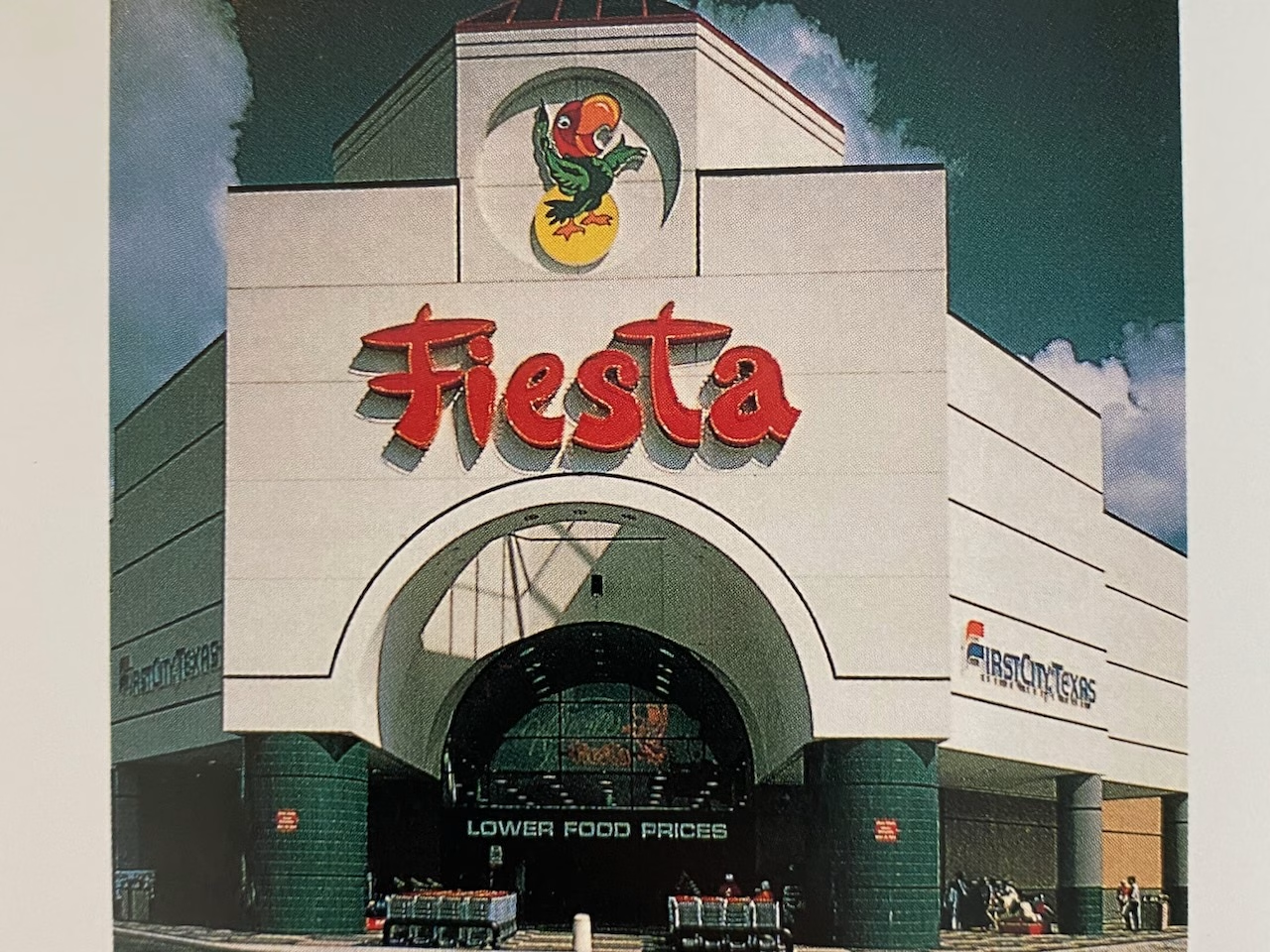
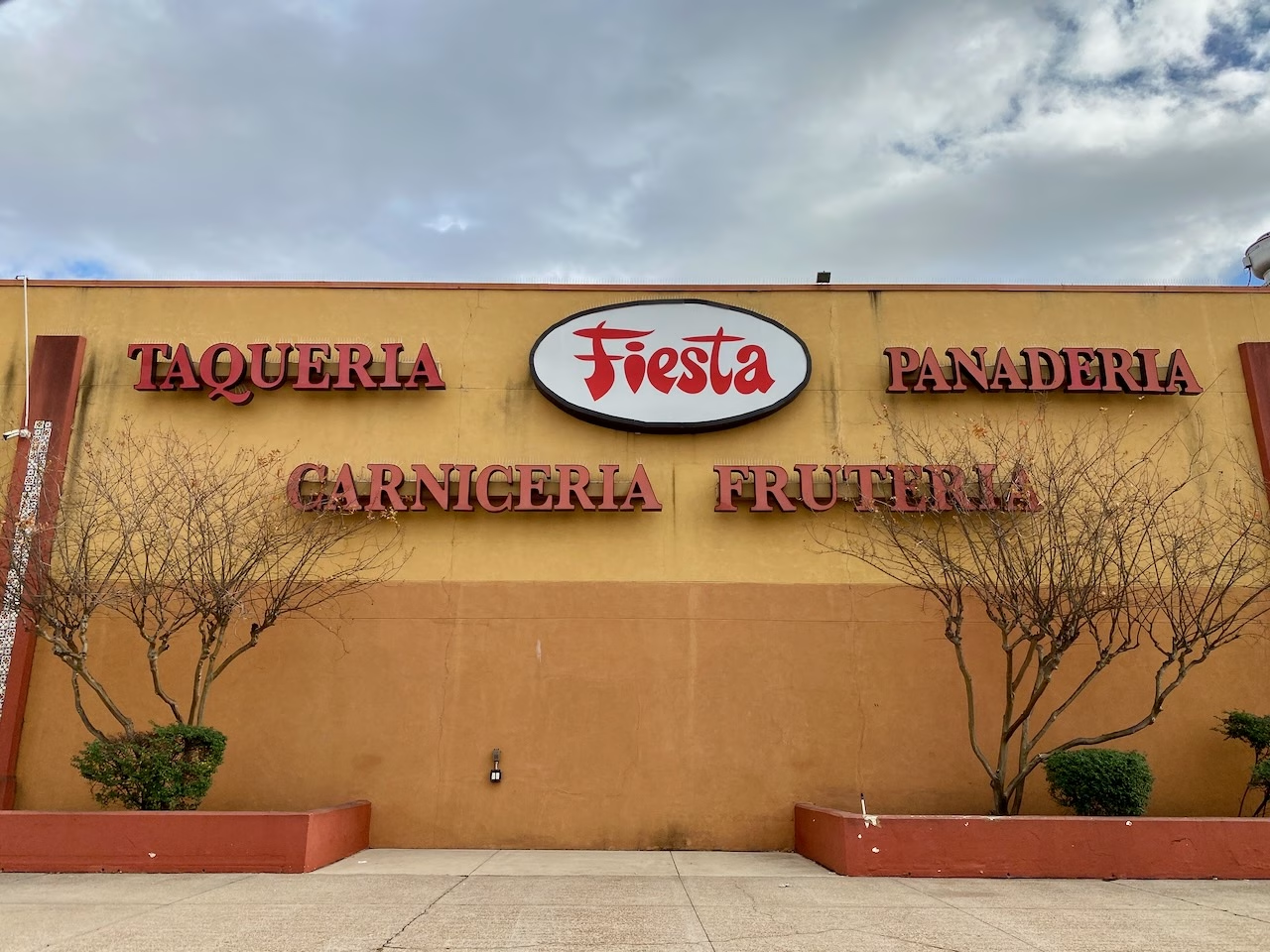
Chedraui’s main base of operations is in Mexico, and it expanded into California under the name El Super in 1997. El Super entered Texas in 2016, and following Chedraui’s acquisition, there was considerable speculation about a potential name change. However, initially, Chedraui was quite hands-off about Fiesta’s image. While the exterior remained the same, this ownership brought many necessary updates to Fiesta and its operations. After seeing potential in the chain, Chedraui has remodeled most Fiesta locations, which now resemble El Super stores. Gone are the bright neon and mesmerizing chase lights, but Pepe remains, and is being rolled out in El Super remodels, albeit in name only so far. The change in ownership has also led to an investment in new stores, with a brand-new location opening in Lewisville in 2024. El Super also appears to be working to reopen some of the stores closed by Harvey. While Fiesta may not be the dominant force it once was, its future is certainly looking better than it has in years.
Location List
Store No | Address | Notes |
|---|---|---|
| 1 | 3140 Fulton St, Houston, TX 77009 | 1972-1984 Former H&P, Demolished at some point for Elementary School |
| 1 | 1020 Quitman St, Houston, TX 77009 | 1984-Present, Only number reuse to date |
| 2 | 2300 N Shepherd Dr, Houston, TX 77008 | 1975-2016 Former Food Giant, Demolished for HEB |
| 3 | 1611 Spencer Hwy, South Houston, TX 77587 | 1978-1982 Part of Big Tex Flea Market, Still standing |
| 3 | 800 S Wayside Dr, Houston, TX 77023 | 1979-Present, Was fifth to open, Renumbered at some point |
| 4 | 1603 Spencer Hwy, South Houston, TX 77587 | 1982-Present Moved to present location in 1982, Originally 1611 Spencer (adjacent building) |
| 5 | 5600 Mykawa Rd, Houston, TX 77033 | 1979-Present Former Fed-Mart |
| 6 | 3707 Avenue H, Rosenberg, TX 77471 | 1982-Present Adjacent to Kmart |
| 7 | 6200 Bellaire Blvd, Houston, TX 77081 | 1982-Present Former Globe, Reopened briefly as a Fed-Mart |
| 8 | 2323 Wirt Rd, Houston, TX 77055 | 1982-Present Former Fed-Mart |
| 9 | 10401 Jensen Dr, Houston, TX 77093 | 1983-Present Former Fed-Mart |
| 10 | 4711 Airline Dr, Houston, TX 77022 | 1984-Present Former Gemco |
| 11 | 12201 East Fwy, Houston, TX 77015 | 1984-2017 Former Gemco, Flooded, Intended to be replaced with Bravo Ranch store but never happened, Fiesta claims will reopen |
| 12 | 5800 Lyons Ave, Houston, TX 77020 | 1984-Present Former Weingarten's |
| MM | 5858 S Gessner Dr Ste #150, Houston, TX 77036 | 1986-1996 Fiesta Mini Mart Concept, Now Family Dollar |
| $ | 2912 Fulton St, Houston, TX 77009 | 1987-2008? Fiesta Dollar Store Concept, Lasted at least into 90s |
| 13 | 2300 N Shepherd Dr, Houston, TX 77008 | 1987-? Leased Space, Originally used for Fiesta Offices, Demolished |
| 14 | 14315 Bellaire Blvd, Houston, TX 77083 | 1987-Present Second new build Fiesta |
| 15 | 2224 Farm to Market 1960 Rd W, Houston, TX 77073 | 1989-1997 Former Woolco, Later Randalls |
| 16 | 20740 Gulf Fwy, Webster, TX 77598 | 1989-1994 Hydroponic Fiesta, Largest Store Ever 236k Sqft, Later downsized by 45k Sq Ft including removing Hydroponics |
| 17 | 4200 San Jacinto St, Houston, TX 77004 | 1988-2020 Property purchased by Rice University, Fiesta evicted |
| 18 | 8130 Kirby Dr, Houston, TX 77054 | 1988-Present, Developed by Weingarten Property |
| 19 | 1005 Blalock Rd, Houston, TX 77055 | 1990-2008 Now 99 Ranch Market |
| 20 | 8320 FM 1960, Houston, TX 77064 | 1989-Present Modeled after a casino in Reno |
| 21 | 9805 Farm to Market 1960 Bypass, Humble, TX 77338 | 1990-1992 Sold to Randalls, Later subdivided |
| 22 | 12355 S Main St, Houston, TX 77035 | 1991-Present, Built adjacent to a closed Kmart, Entrance built to resemble a mall |
| 23 | 9419 Mesa Dr, Houston, TX 77028 | 1991-Present, New build across from former Weingarten/Grant's |
| 24 | 11240 Fondren Rd, Houston, TX 77071 | 1992-Present Former Weingarten, Then Safeway/AppleTree |
| 25 | 3909 I-35, Austin, TX 78722 | 1992-Present |
| 26 | 600 W William Cannon Dr, Austin, TX 78745 | 1992-1996 |
| 27 | 3295 College St, Beaumont, TX 77701 | 1992-1996 Former Kmart? Unsure |
| 28 | 11006 Airline Dr, Houston, TX 77037 | 1992-Present Former Safeway/AppleTree |
| 29 | 611 W Jefferson Blvd Dallas, TX 75208 | 1993-Present Former Sears Site |
| 30 | 5235 Katy Fwy, Houston, TX 77007 | 1993-2018 Fiesta HQ, Demolished |
| 31 | 1175 Edgebrook Dr, Houston, TX 77034 | 1992-Present Former Weingarten, Then Safeway/AppleTree |
| 32 | 9727 Webb Chapel Rd, Dallas, TX 75220 | 1997-Present |
| 33 | 1407 Studewood St, Houston, TX 77008 | 1992-2013 Former Independent, Studewood Food Market, Claytons, Demolished |
| 34 | 3030 S Lancaster Rd, Dallas, TX 75216 | 1995-Present |
| 35 | Never Built | Likely Hollister @ 290, Also possibly W Little York |
| 36 | 7061 Lawndale St, Houston, TX 77023 | 1994-2007 Originally a Piggly Wiggly (1950s), Then Texas-Servall/Weingarten, Later Safeway/AppleTree, Now 99 Cent Only Store |
| 37 | 7510 Bellfort Ave, Houston, TX 77061 | 1994-Present Houston's First Safeway, Later AppleTree |
| 38 | 3803 Dunlavy St, Houston, TX 77006 | 1994-2013 Former Weingarten, Then Safeway/AppleTree, Demolished |
| 39 | 8710 Bellaire Blvd, Houston, TX 77036 | 1994-Present Former Safeway/AppleTree |
| 40 | 5334 Ross Ave, Dallas, TX 75206 | 1994-Present |
| 41 | 1728 W Mt Houston Rd, Houston, TX 77038 | 1995-Present Former Gerland's/Minimax Amato's and Claytons |
| 42 | 22780 Cypresswood Dr, Spring, TX 77373 | 1995-1996 Former Food Basket, Had attached gas station, Later subdivided by Dollar General and Bubba's Hardware |
| 43 | 8650 S Braeswood Blvd, Houston, TX 77031 | 1995-Present Former Kroger |
| 44 | 4200 South Fwy, Fort Worth, TX 76115 | 1997-2008 #M5 Part of La Gran Plaza Mall, Former Buddie's/Winn Dixie |
| 45 | 2415 Bernardo De Galvez Ave, Galveston, TX 77550 | 1997-2000 Former Weingarten/Safeway, Later Arlan's, Still standing |
| 46 | 275 NE 28th St, Fort Worth, TX 76164 | 1998-Present, Briefly Closed in 2015 for remodeling, Originally 245 |
| 47 | 1530 Independence Blvd, Missouri City, TX 77489 | 1998-Present, Former Food Lion |
| 48 | 1712 SE 8th St, Grand Prairie, TX 75052 | 1998-2000, Demolished? |
| 49 | 4114 Fulton St, Houston, TX 77009 | 1998-Present, Originally Henke-Kroger, Later Rice/Grocery World |
| 50 | 5815 Lockwood Dr, Houston, TX 77026 | 1998-Present, Originally Weingarten, Later Rice/PriceBuster |
| 51 | 9420 Cullen Blvd, Houston, TX 77051 | 1998-Present, Originally Weingarten, Later Rice |
| 52 | 8201 Broadway St, Houston, TX 77061 | 1998-2000, Originally Eagle, Later Rice/PriceBuster |
| 53 | 975 E Irving Blvd, Irving, TX 75060 | 2000-Present |
| 54 | 2940 S First St, Garland, TX 75041 | 2002-Present |
| 55 | 1120 S Lamar Blvd, Austin, TX 78704 | 2001-2003 |
| 56 | 4330 Hwy 6 N, Houston, TX 77084 | 2001-2017 Flooded in Harvey, In Limbo |
| 57 | 2951 S Buckner Blvd, Dallas, TX 75227 | 2003-Present |
| 58 | 8060 Spring Valley Rd, Dallas, TX 75240 | 2002-Present |
| 59 | 1200 E Parker Rd #400, Plano, TX 75074 | 2002-Present |
| 60 | 1300 E Pioneer Pkwy, Arlington, TX 76010 | 2002-Present |
| 61 | 2700 8th Ave, Fort Worth, TX 76110 | 2002-Present Former Winn Dixie |
| 62 | 3320 Mansfield Hwy, Forest Hill, TX 76119 | 2002-2010 Now Food Land |
| 63 | 1320 N 25th St, Waco, TX 76707 | 2002-2007 Former Safeway, Now Poco Loco Supermarket |
| 64 | 5510 I-35, Austin, TX 78745 | 2007-Present Former Albertsons |
| 65 | 2225 W Ledbetter Dr, Dallas, TX 75224 | 2007-Present |
| 66 | 333 S Mason Rd, Katy, TX 77450 | 2008-Present, Former Kmart |
| 67 | 421 W Bolt St, Fort Worth, TX 76110 | 2008-Present, Replaced #44 |
| 68 | 6401 Abrams Rd, Dallas, TX 75231 | 2008-Present, Former Albertsons |
| 69 | 7809 Camp Bowie W Blvd, Fort Worth, TX 76116 | 2008-Present |
| 70 | 1235 S Josey Ln, Carrollton, TX 75006 | 2008-Present |
| 71 | 3434 W Illinois Ave, Dallas, TX 75211 | 2008-Present |
| 72 | 2223 Singleton Blvd, Dallas, TX 75212 | 2008-2013 |
| 73 | 1145 W Airport Fwy, Irving, TX 75062 | 2008-Present |
| 74 | 11445 Garland Rd, Dallas, TX 75218 | 2008-Present |
| 75 | 1332 S Plano Rd, Richardson, TX 75081 | 2008-Present |
| 76 | 4245 E Berry St, Fort Worth, TX 76105 | 2008-Present |
| 77 | 3460 Webb Chapel Ext, Dallas, TX 75220 | 2008-Present |
| 78 | 102 NW 28th St, Fort Worth, TX 76164 | 2008-2010 Former Carnival |
| 79 | 12584 Westheimer Rd, Houston, TX 77077 | 2012-Present Former Kroger |
| 80 | 13833 Southwest Fwy, Sugar Land, TX 77478 | 2013-2015 Former Gerlands and Beldens, Fiesta Market Place Concept Store |
| 81 | 210 E Davis St, Conroe, TX 77301 | 2013-Present Fiesta Fresh Market Concept Store |
| 82 | 20331 FM 529, Cypress, TX 77433 | 2015-Present, Intended to be Market Place Concept, but downgraded prior to opening |
| 83 | 724 W Main St, Lewisville, TX 75067 | 2024-Present Former Safeway, Most recently a gym |
| 201 | 2877 S Richey St, Houston, TX 77017 | 2017-Present Originally Kroger, Bravo Ranch |
| 202 | 5101 Avenue H, Rosenberg, TX 77471 | Purchased but never opened, Part of Bravo Ranch |
| 203 | 11035 East Fwy, Houston, TX 77013 | Purchased but never opened, Part of Bravo Ranch |
| 204 | 3300 Harwood Rd, Bedford, TX 76021 | 2017 Originally Safeway, Later Tom Thumb, Sun Fresh, Fiesta for only months |
| 205 | 6324 Meadowbrook Dr, Fort Worth, TX 76112 | 2016-2018 Originally Safeway, Later Minyard, Subdivided as of 2024 |
| 206 | 610 Ferris Ave, Waxahachie, TX 75165 | 2016-2018 Originally Safeway, Later Minyard, Currently Food Land as of 2023 |
| 207 | 8040 Ferguson Rd, Dallas, TX 75228 | 2016-2018 Minyards, Vacant of as 2023 |
| 208 | 3630 Forest Ln, Dallas, TX 75234 | 2016-2017 Originally Albertsons, Divested to Minyard in 2015, Subdivided as of 2023 |
| 209 | 2200 W Shady Grove Rd, Irving, TX 75060 | 2016-2020 Originally Minyard, Albertsons as of 2023 |
| 210 | 10121 Lake June Rd, Dallas, TX 75217 | 2016-Present |
| 211 | 4202 Pioneer Rd, Balch Springs, TX 75180 | 2016-2018 Former Minyards, La Mexicana Independent as of 2023 |
| 212 | 3230 Martin Luther King Jr Blvd, Dallas, TX 75210 | 2016-Present Former Minyards |
| 213 | 1450 W Pleasant Run Rd, Lancaster, TX 75146 | 2016-Present Former Minyards |
| 214 | 2223 Singleton Blvd, Dallas, TX 75212 | 2016-2018 CashSaver as of 2023 |